
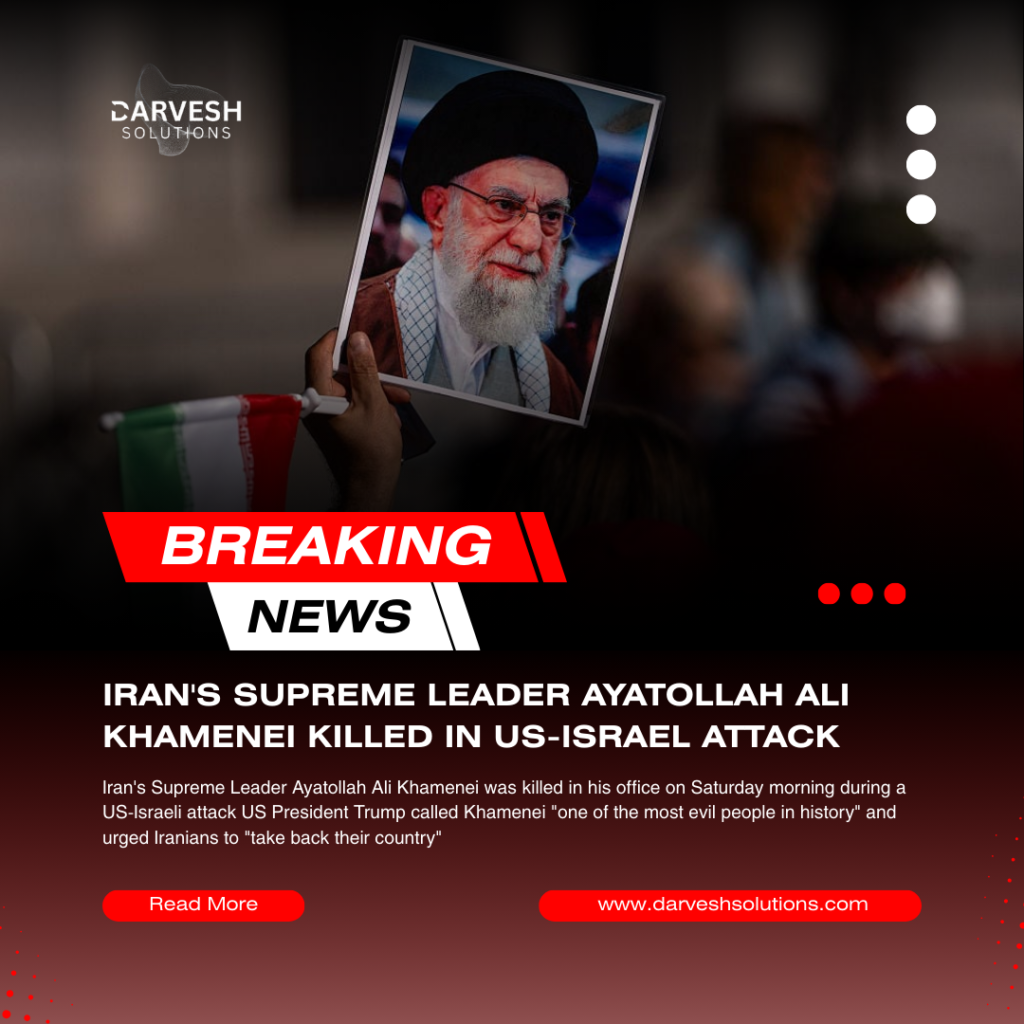
Iran’s Supreme Leader Ayatollah Ali Khamenei Killed in US-Israeli Airstrikes
Iran’s Supreme Leader Ayatollah Ali Khamenei was killed in his office on Saturday morning during a US-Israeli attack Iran’s Supreme Leader Ayatollah Ali Khamenei Killed in US-Israeli Airstrikes Iran’s Supreme Leader Ayatollah Ali Khamenei killed in US-Israel attack Iran’s Supreme Leader Ayatollah Ali Khamenei was killed in his office on Saturday morning during a US-Israeli attack US President Trump called Khamenei “one of the most evil people in history” and urged Iranians to “take back their country” Market is moving upwards with this news even on Sunday Iran’s Supreme Leader Ayatollah Ali Khamenei Killed in US-Israeli Strikes — Major Geopolitical Shock In a dramatic and unprecedented escalation of Middle Eastern tensions, Iran’s Supreme Leader Ayatollah Ali Khamenei has been confirmed killed following a series of coordinated military strikes by the United States and Israel, state media and Western officials reported. The death of the 86-year-old leader marks a historic turning point in global geopolitics and raises urgent questions about regional stability, succession, and the future of the Islamic Republic. Joint Military Operation and Confirmation of Death According to Iranian state media, Ayatollah Khamenei was killed on Saturday morning when a joint US-Israeli military operation targeted his office in Tehran. State broadcasters announced his death early Sunday and declared a 40-day period of national mourning. US President Donald Trump publicly confirmed the operation in a social media post, calling Khamenei “one of the most evil people in history” and affirming that the joint strikes successfully eliminated the long-time leader. Israeli officials also stated that senior members of Iran’s military and intelligence structures were among those killed in the offensive. Background of the Attack The attacks, described as part of a broader campaign to weaken Iran’s military capabilities and leadership, involved significant air and missile strikes across multiple strategic locations. According to reports, more than 500 targets, including missile sites, air defense installations, and command facilities, were hit as part of the initial assault. While Western leaders have framed the operation as a defensive and punitive measure, Tehran has condemned the attacks as an illegal act of aggression. Iranian officials and the Islamic Revolutionary Guard Corps (IRGC) have vowed retaliation “with severe and decisive consequences.” Domestic Response in Iran State media showed scenes of mourning in major cities across Iran, including Tehran and Mashhad, with crowds gathering to pay respects. Iranian President Masoud Pezeshkian labelled avenging Khamenei’s death as a “legitimate duty and right,” signaling a potential continuation of hostilities. Protests have been reported in Iranian urban centers and in parts of the Middle East, including Iraq, where supporters of Iran’s allied groups expressed grief and anger. Regional and Global Reactions The killing of Iran’s highest political and religious authority has reverberated globally. Some governments and leaders expressed concern about the escalation, warning that the region could slide into broader conflict. Other nations called for restraint and de-escalation to avoid widespread instability. Analysts have noted that the attack has already triggered retaliatory strikes by Iranian forces targeting US military bases and allied positions in the region, including the Gulf states. These events have fueled fears of expanded hostilities involving multiple countries. Succession and Power Vacuum Khamenei had served as Iran’s Supreme Leader since 1989, following the death of the Islamic Republic’s founder, Ayatollah Ruhollah Khomeini. With no immediate successor named, Iran faces a significant leadership vacuum. Under Iranian law, a council composed of top state officials is expected to temporarily govern until the Assembly of Experts appoints a new supreme leader. This uncertainty may spur internal power struggles within the Iranian political and military elite, particularly involving the IRGC and conservative clerical factions. Global leaders and diplomats are closely watching developments as Tehran navigates its next steps. Impact on Markets and Global Economy The news of Khamenei’s death has also had immediate effects on financial markets. Oil prices, defense stocks, and currency markets have exhibited volatility as investors priced in potential risks to supply chains and regional stability. Experts warn that even perceptions of extended conflict in the Middle East can significantly affect commodities and global trade flows. Looking Ahead As global powers respond and Iran grapples with its own path forward, the situation remains extremely fluid. Diplomatic channels are strained, and calls for de-escalation coexist with declarations of retaliation. The elimination of Ayatollah Khamenei, a pivotal figure in Middle Eastern politics for more than three decades, sets in motion a series of potentially historic developments that could reshape regional alliances and international relations. Follow for updates in Binance
Iran’s Supreme Leader Ayatollah Ali Khamenei Killed in US-Israeli Airstrikes Read More »